Brochures
  Get in touch
  Apply Now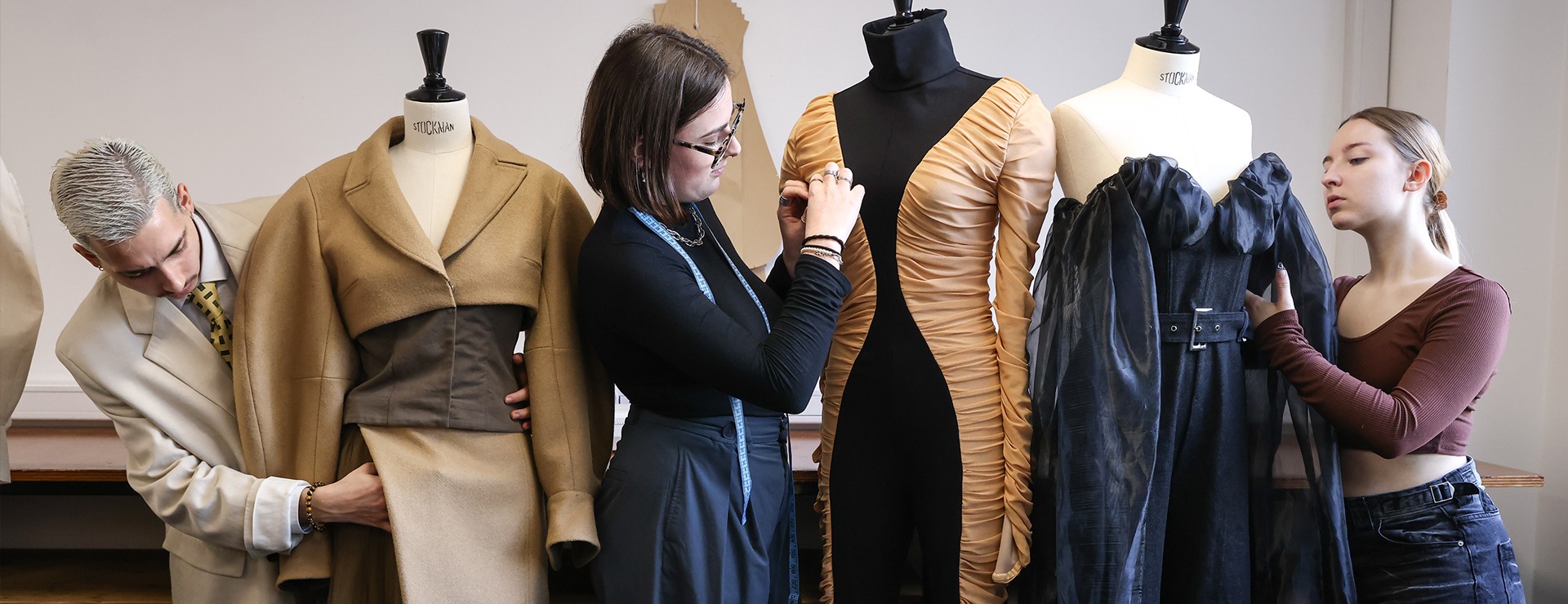
Bachelor Fashion Design
- Available in: Paris, Istanbul
- Language: Full French or Full English
- Duration: 3 years
- ECTS: 180
- Next Intakes: january 2026 (EN), september 2026 (FR, EN),
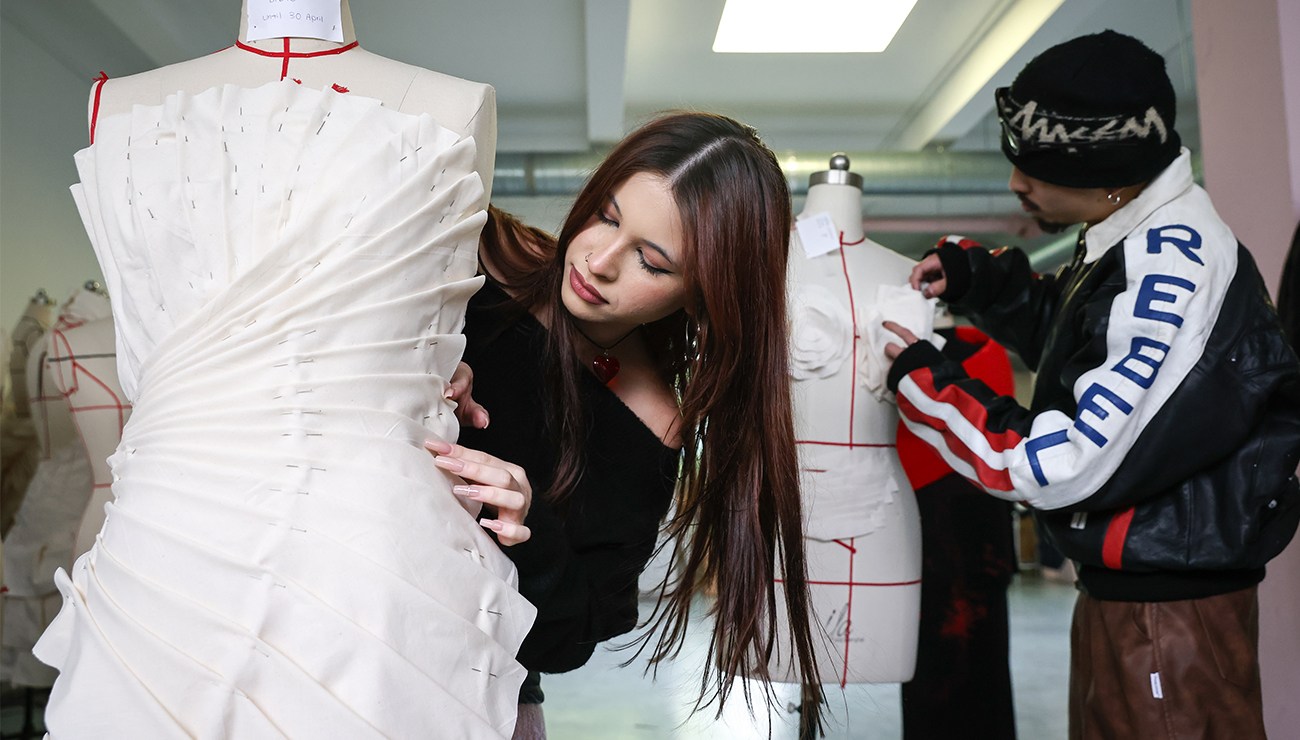
The Bachelor Fashion Design is our signature program. Blending the timeless elegance of French haute couture with cutting-edge fashion technology and a global perspective, this Bachelor program provides you the skills to thrive in today’s fashion industry.
Our innovative and diverse teaching methods - including classes, workshops, independent research, experiments, presentations, and field trips create a dynamic learning environment, drawing inspiration from a wide range of cultural influences.
IFA Paris’ personalized approach is tailored to meet the unique career goals of each student. Our fashion program strikes a balance between creativity and production, allowing students to master advanced pattern-making techniques while developing their own distinctive creative vision. We cultivate fashion designers who are as imaginative in their concepts as they are meticulous in their execution.
Throughout their studies, our Bachelor Fashion Design students consider the broader context of their profession, including the latest trends, industry news, and sustainability. By mastering technical skills, fostering creativity, and developing a personal style, our graduates are equipped with the knowledge and abilities to thrive in a variety of roles within the global fashion industry.
Learning Objectives
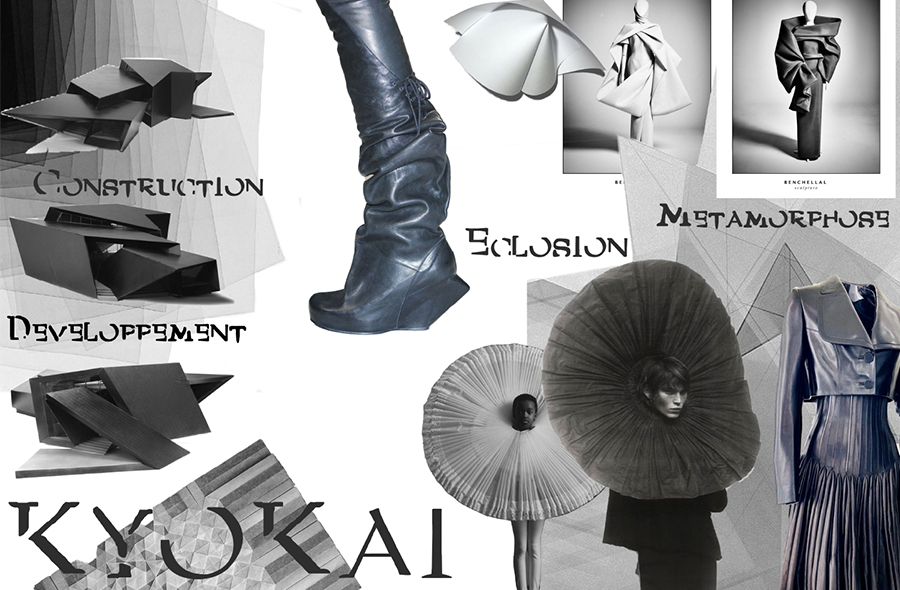
- Cultivate Innovative Design Excellence: Students will push the boundaries of fashion design by integrating cutting-edge concepts, experimental materials, and avant-garde aesthetics, driving the future of fashion through visionary and impactful creations.
- Master Technical Skills in Pattern Making, Draping, and Sewing with a Deep Understanding of French Fashion Heritage: Students will develop advanced technical proficiency in pattern making, draping, and sewing, while also gaining a comprehensive knowledge of French fashion heritage, enabling them to integrate timeless techniques and classic design principles into the creation of meticulously crafted garments.
- Design Fashion with a Commitment to Sustainability, Diversity, and Inclusivity: Students will learn to create fashion that embodies principles of sustainability, while also embracing diversity and inclusivity, ensuring that their designs are environmentally responsible, culturally diverse, and accessible to a wide range of audiences, ultimately contributing to a more equitable and sustainable fashion industry.
- Discover Future-Ready Digital and Technological Tools: Students will harness the power of next-generation digital technologies, such as AI-driven design, virtual reality, and 3D printing, to revolutionize the fashion design process and create the next wave of fashion innovation.
Year 1
From their very first year in our Bachelor Fashion Design program, students are encouraged to experiment. As they learn the fundamental techniques and rich history of fashion, they also develop their creative processes and aesthetic sensibilities. IFA Paris immerses its fashion students in a project-based learning environment, similar to professional design studios, to foster the development of cross-disciplinary skills.
Teachings
Creation
- Fashion figures
- Classic design
- Color theory
- Print collection
- Technical drawing
- 3D volume research
- Textile technologies (weaving, textile fibres, etc.)
Digital
- Computer graphics
- LECTRA
- Browzwear (3D Modeling)
- AI Applied to Trend Analysis
- AI and Prompt Engineering
Culture and business
- Contemporary Fashion History
- Fundamentals of marketing
- Strategic marketing
Production
- Introduction to using a sewing machine
- Shirt-making
- Pants-making
- Skirt-making
Pattern-making and draping
- Making a pattern for a skirt, a shirt, and pants
- Draping a skirt and a dress
Optional internship
First-year highlights
- Developing a creative process: from inspiration to production of a garment
- Production of looks from the first few weeks
- Discovery of the Fashion Tech Lab and its tools (3D printing, laser cutting, VR, …)
- Participation in two Fashion Workshops (sustainable development and cooperation with an international school)
- Working with plants and creating natural dyes
- Personal Mini Collection Project
Year 2
Once the fundamentals have been acquired, the second year of the Bachelor Fashion Design allows students to deepen their technical skills and assert their own creative style.
During this second year, fashion design students acquire the most innovative working methods in the industry. They work daily with artificial intelligence to understand it as a creative tool, both for trend research and for developing looks. In parallel, they discover the traditional skills associated with men’s fashion, knitwear, tailoring, and more, and practice demanding techniques that allow them to become versatile professionals.
Teachings
Creation
- Knitwear project
- Fashion accessories
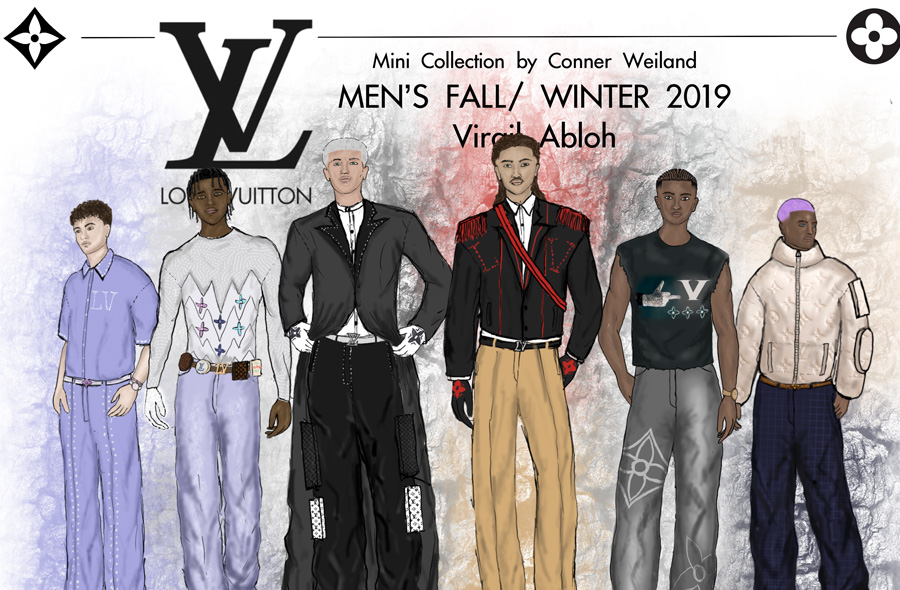
- Men's collection
- Fashion sustainability
- Textile designs
- Sportswear and Haute couture
Digital & Business
- Computer graphics
- AI Generative Design
- LECTRA
- Browzwear (3D Modeling)
- AI: Ethical, Social, and Environmental Issues
Production
- Haute couture projects
- Sportswear
- Menswear
Pattern-making and draping
- Haute couture projects
- Sportswear
- Menswear
2-3 month exploratory internship
Second-year highlights:
- Working with AI
- Focus on blockchain and traceability
- Thematic weeks: Fashion accessories and 3D printing.
Year 3
A shift in pedagogical perspective: the keyword for this 3rd year is « Freedom ». During their final year of study in fashion design, students refine their professional project and create a mini-collection using the creative codes they have developed during the first two years. They work independently while benefiting from close coaching by IFA Paris professors.
To validate their Bachelor’s degree, students must create an end-of-year mini-collection that reflects their personal universe. They must pay attention to personal creativity, the modernity of the products, the production techniques used, and the marketing strategy. The collection is presented in the form of a personal portfolio.
The creation of the end-of-Bachelor’s mini-collection will set the pace for this final year. Each student will have a personal interpretation of the given subject. Based on this, students will develop their own concept, create fashion and accessory sketches, build a collection plan and finally prepare technical sheets for the products they will create themselves. These products will require conducting volume research, identifying the most efficient technique for constructing garments patterns, etc. Students will propose judiciously chosen materials based on the challenges of their collection. They will have to determine the best assembly and finishing techniques to apply them in the production of prototypes.
All the teachings of the 3rd year of the IFA Paris Bachelor Fashion Design are thus centered around the creation of the personal collection.
Teachings
- Creation of a mood board
- Creation of silhouettes
- Portfolio
- Advertising campaign & photoshoot
- Fittings
- Sewing the collection
- Brand development
- One-on-one mentoring
Students use AI at every stage of the creative process, from developing the moodboard to the final design, to explore new perspectives and enrich their creative workflow.
3–6-month internship
Third-year highlights:
- Participation in the school’s annual fashion show
- Creative Bootcamp
- Significant professional experience
- Creation of a personal collection from A to Z with total artistic freedom
- Preparation for professional interviews with a portfolio enriched by product realizations
Online Format
The online program takes place live and in real-time (Istanbul local time) and you will interact with the lecturer and other students through our online platform. However, if you cannot attend or miss a live class, every session is also recorded and saved, so you can go back and watch it at a later suitable time for you.
For more information visit our Study Online - Distance Learning page
Material Requirements for Online Format
- A recent computer with a recent operating system
- A list of fashion design supplies will be provided at the start of the Bachelor
- A sewing machine
- A good internet connection
- An up-to-date web browser
- Microphone & Headphones (a headset with microphone/headphones is recommended)
- A webcam
Program Compliance Data
Result indicators
- Participation rate for skill validation exams: 100%
- Success rate of the program: 98%
- Overall employment rate at 6 months: 93%
- Employment rate in the targeted profession(s) after 6 months: 80%
Requirements
- Year 1 Admission: Applicants must hold a Level 4 qualification (equivalent to a High School Diploma)
- Year 2 Admission: Applicants must have successfully completed one year of higher education (equivalent to 60 ECTS credits)
- Year 3 Admission: Applicants must have successfully completed 2 years of higher education (equivalent to 120 ECTS credits)
Course duration
The Bachelor Fashion Design takes place over three years. The students receive +/- 600 hours of teaching per year.
Teaching methods employed
Classes are held in person or online and are structured on the basis of group work, face-to-face teaching, lectures, etc.
Certification type
The awarding of the Stylist-Pattern Maker Level 6 certification (equivalent to Bac+3/4) is subject to the validation of all skill blocks.
RNCP Title: “Styliste-Modéliste” (Fashion Designer – Pattern Maker)– Level 6 (equivalent to a Bachelor’s degree – 3 to 4 years of higher education), awarded by IFA Paris and registered in the RNCP (French National Directory of Professional Certifications) by decision of France Compétences on January 31, 2025 for a period of 5 years (RNCP No. 40157).
In case of partial validation, any competency block obtained is valid for life.
No bridging options
Possibility to continue your studies with a program leading to an RNCP Level 7 certification.
Assessment methods
Oral and written assessments, continuous assessment, evaluation during project phases.
Operational Objectives / Skills Targeted by the Certification
- Define the Trends of a Fashion Collection
- Design a Fashion Collection
- Oversee the Production of a Fashion Collection
- Promote a Fashion Collection
Admission Requirements
Prerequisites:
- At least 16 years of age
- High school graduate
-
Depending on the chosen teaching language (English or French), non-native speakers should provide a language proficiency score:
- English teaching language: an IELTS score of 5.5 or above, or a TOEFL score of 65 or above. Alternatively, provide an English training certificate or proof of previous education in English
- French teaching language: a TCF score of B2 or equivalent. Alternatively, a proof of previous education in French
Required documentation:
- Resume
- Motivation letter
- Language proficiency certificate
- Proof of validation of the above-mentioned prerequisite
- Passport photo
- Passport copy for non-EU applicants and ID copy for EU applicants
- Portfolio
For more information about the application process, please visit our How to apply page.
Admission Requirements for transfer in 2nd and 3rd year
Prerequisites:
- In addition to the pre-requisites detailed for Year 1, you will need to provide justification of working experience in fashion (short term internships, summer jobs…etc.), as well as a proof of validation of the necessary ECTS credits, or equivalent, required to integrate the level you are aiming for
-
Depending on the chosen teaching language (English or French), non-native speakers should provide a language proficiency score:
- English teaching language: an IELTS score of 5.5 or above, or a TOEFL score of 65 or above. Alternatively, provide an English training certificate or proof of previous education in English
- French teaching language: a TCF score of B2 or equivalent. Alternatively, a proof of previous education in French
Required documentation:
- Resume
- Motivation letter
- Language proficiency certificate
- Proof of validation of the above-mentioned prerequisite
- Academic transcripts from previous years corresponding to the intended entry level
- Detailed academic documents for the program currently being followed (certificate of enrollment, course descriptions, syllabus, etc.)
- Passport copy for non-EU applicants and ID copy for EU applicants
- Passport photo
- Portfolio
- Most recent academic award proving validation of the necessary ECTS for transfer in your desired level. Detailed academic documents, such as course handbook or syllabi, may be requested to establish credit recognition
For more information about the application process, please visit our How to apply page.
Accessibility
You may be interested in the possibility of enrolling on one of our programs.
Contact us so that we can provide you with all the information and advice you need: accessibilite@ifaparis.com.